Blog · Comparisons
Tidio alternatives for Shopify stores: 7 options compared on price, orders and AI [2026]
The best Tidio alternative for a Shopify store is the one that bills a single unit, sells in the chat and works on orders. We compared seven, with every price read on October 17, 2026: Strathly comes first for Shopify stores, and each entry says who the tool suits better than Tidio.
Updated · The Strathly team · 28 min read
On this page
- Why Shopify stores look for a Tidio alternative
- The 7 Tidio alternatives at a glance
- 1. Strathly: best Tidio alternative for Shopify stores
- 2. Chatty: the cheapest paid start on Shopify
- 3. Shopify Inbox: the free, first-party option
- 4. Gorgias: the full ecommerce helpdesk
- 5. Zipchat: AI sales on the site, WhatsApp and Instagram
- 6. Fin by Intercom: an AI agent for teams on a helpdesk
- 7. Crisp: a flat price per workspace
- Tidio vs Intercom and Tidio vs Gorgias, in short
- How to choose a Tidio alternative
- Switching from Tidio to Strathly
- How Strathly helps
- Frequently asked questions
- Conclusion
Tidio is one of the most popular chats on Shopify, and for good reason: there's a free plan, it runs on any website, and its Lyro AI agent now answers, sells and acts on orders. Most stores that look for a Tidio alternative aren't unhappy with the chat itself. They're unhappy with the bill, because Tidio prices the work in three separate meters, and the AI meter grows fastest just when the store does.
This guide puts seven Tidio alternatives side by side for a Shopify store: what each one bills you for, whether it sells in the chat, how far it goes into orders, and where a conversation lands when the AI should step back. Every competitor price was read from the vendor's own pricing page or its Shopify App Store listing on October 17, 2026. We also covered Tidio among nine AI chatbots for ecommerce, compared on selling, orders and price, if you want the wider field.
If you sell on Shopify and want to see the difference on your own catalog and orders: Install on Shopify. Setup takes about 2 minutes. 14-day free trial. Cancel anytime.
Why Shopify stores look for a Tidio alternative
Shopify stores look for a Tidio alternative for three documented reasons: the AI is a second subscription on top of the helpdesk, the AI meter gets expensive at volume, and some things a store takes for granted (no third-party branding, more than ten teammates) sit behind an add-on or a sales call. None of this is hidden; it's all on Tidio's pricing page. It's just easy to miss on day one, when the free plan covers everything.
Tidio sells three products that can be bought separately or together: Customer Service (the helpdesk, the inbox and live chat), Lyro AI Agent (the AI), and Flows (rule-based chatbots). Each has its own meter:
- Billable conversations, for the helpdesk: a conversation counts once a human agent replies. Tidio's pricing FAQ says responses from Flows and Lyro "are not counted as agent replies".
- Lyro conversations, for the AI: any conversation with at least one reply from Lyro, however many replies it takes.
- Visitors reached with Flows, for the automations.
That design means one shopper can show up on two meters: Lyro answers first, then hands the chat to your team, and the human reply makes it a billable helpdesk conversation as well.
Tidio's prices, read on October 17, 2026
From Tidio's pricing page (its plan data, in US dollars, monthly billing) and its Shopify App Store listing:
- Free: 50 billable conversations a month, Flows for 100 visitors, and 50 Lyro conversations once (not every month).
- Customer Service Starter: $29 a month for 100 billable conversations. Growth: from $59 a month for 250, up to $349 for 2,000.
- Lyro AI Agent, on top: $39 a month for 50 Lyro conversations, $75 for 100, $140 for 200, $210 for 300, $350 for 500, $525 for 750 and $700 for 1,000. Above that, the Plus plan (from $300 a month, contact sales) or Premium (from 3,000 Lyro conversations, contact sales).
- Seats: up to 10 agents on the self-serve plans; more only on Plus.
- Trial: 7 days, no card; then the account drops to the Free plan unless you upgrade.
- On the Shopify App Store listing: "No Tidio branding" is marked as an add-on on the Flows and Lyro plans, and the listing says "Lyro pauses at your limit".
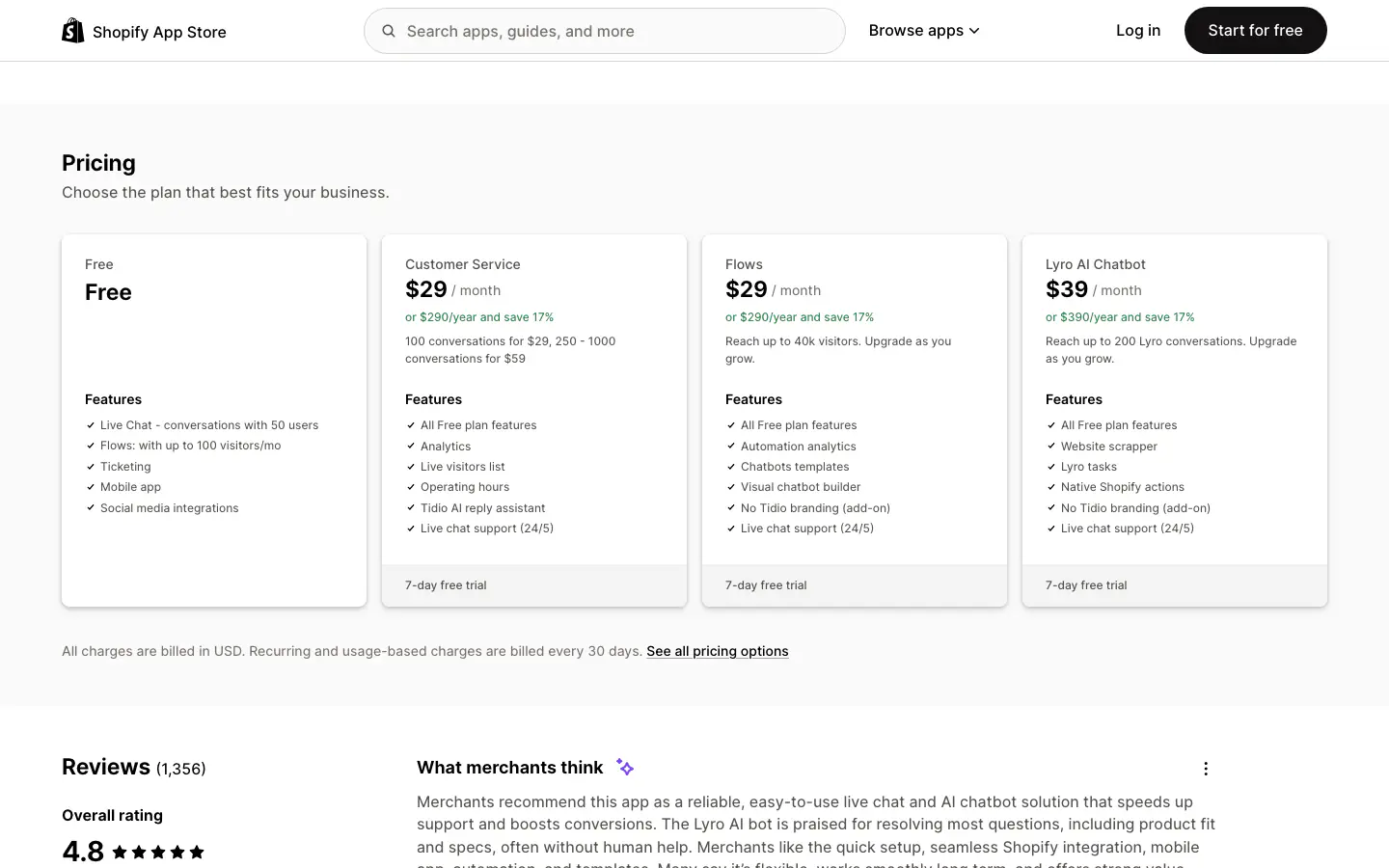
To be fair to Tidio: it has 4.8 stars from 1,356 reviews on the Shopify App Store, its listing now says Lyro handles "order status, refunds, cancellations and order edits" and adds to cart on product pages, and its inbox covers chat, email, Instagram and WhatsApp with iOS and Android apps. If you sell on several platforms, need every channel in one inbox and keep your AI volume low, Tidio is a strong product. The alternatives below win on a specific point each, and for a Shopify store that wants its chat to sell and handle orders at a predictable price, one of them wins on all of them.
The 7 Tidio alternatives at a glance
| Tool | Runs on | Best for | You pay per |
|---|---|---|---|
| Strathly | Shopify | Shopify stores that want the chat to sell and work on orders | Ivy conversation (team conversations unlimited); from $39 a month |
| Chatty | Shopify | The lowest paid entry price on Shopify | AI conversation, with product and member caps per plan |
| Shopify Inbox | Shopify | A free, first-party chat | Free |
| Gorgias | Shopify, WooCommerce, BigCommerce, Magento, PrestaShop | Large teams that need a full ecommerce helpdesk | Helpdesk ticket, plus automated interaction |
| Zipchat | Shopify and most commerce platforms | AI sales on the site, WhatsApp and Instagram | AI reply |
| Fin by Intercom | Any website; Fin for Ecommerce on Shopify | Teams already on Intercom or another helpdesk | Outcome, plus helpdesk seats |
| Crisp | Any website, with a Shopify app | A flat monthly price for a multichannel inbox | Workspace (flat), with AI credits |
Competitors' prices are in their entries, each with its source and date. The column that matters most is the last one: two tools with the same monthly price can cost very different amounts for the same month of chats, depending on what they count.
1. Strathly: best Tidio alternative for Shopify stores
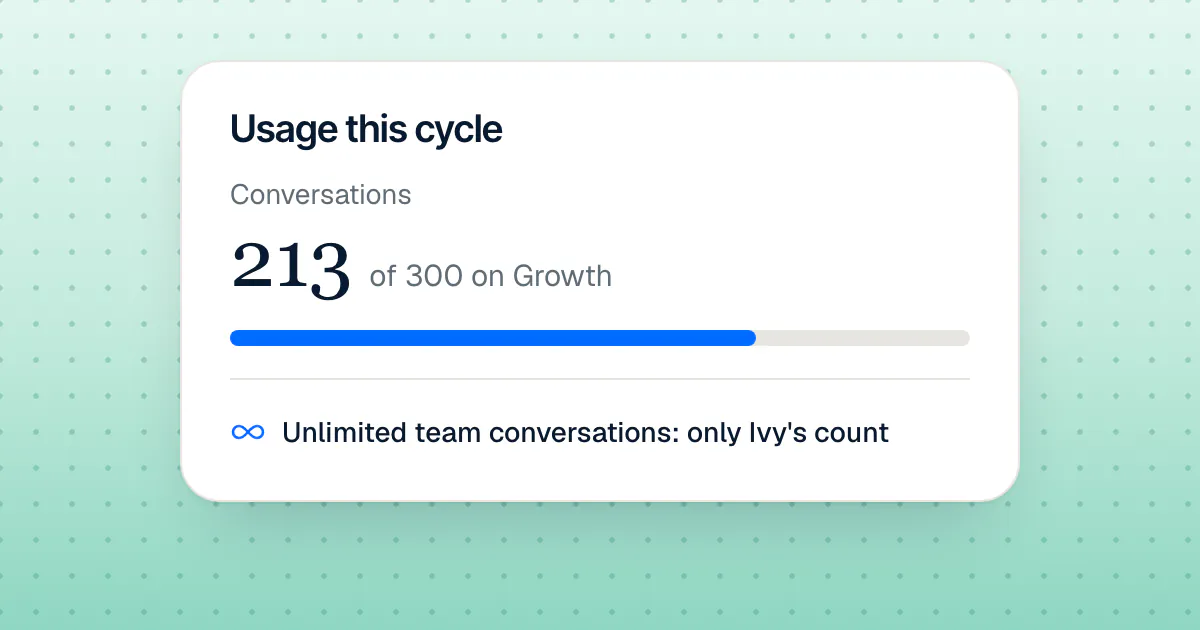
Only the conversations Ivy takes count: your team's conversations are unlimited on every plan, and every feature is on every plan. That's the opposite of Tidio's model. There is no helpdesk meter for your team's replies, no separate AI subscription, no branding add-on and no feature you unlock by moving up a plan: the plans differ only in how many conversations Ivy handles each month and how many teammates join.
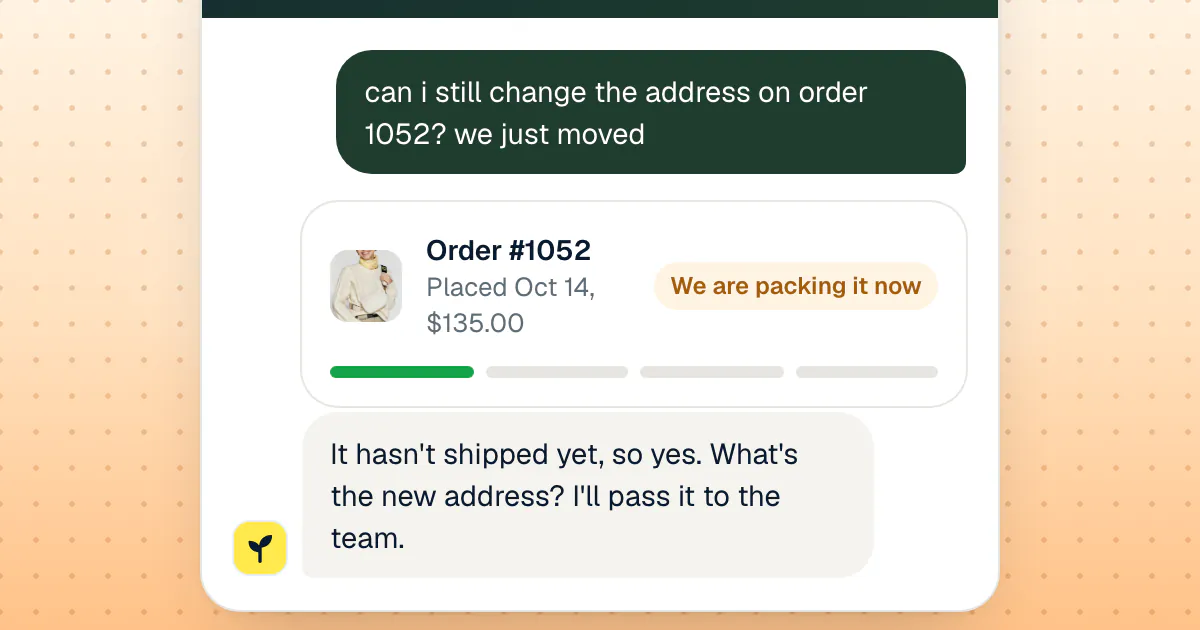
And Ivy doesn't stop at answering: she works on the order. With an order number and the email used at checkout, she shows the shopper the status, the carrier and the tracking link straight from Shopify. Refunds, cancellations, address changes and free replacements are prepared as drafts your team approves with one click or, if you switch an action on, done by Ivy herself within the money cap you set, only for a shopper who proved the order is theirs, with 10 seconds to undo before anything reaches Shopify.
Runs on: Shopify only. Ivy is Strathly's assistant; she lives in a chat widget that goes into your theme as a Shopify app embed, with no code.
One meter you can read at a glance
Strathly counts one thing: a conversation Ivy takes. Everything one shopper asks her within 24 hours is one conversation, however many questions and chats it takes, with one more only every 30 of her replies in a very long visit. When she hands a shopper to your team, the conversation doesn't count twice, and the conversations your team answers on its own never count at all. Greetings nobody answered, your own tests in the Playground and chats stopped by the spam protections are never counted either.
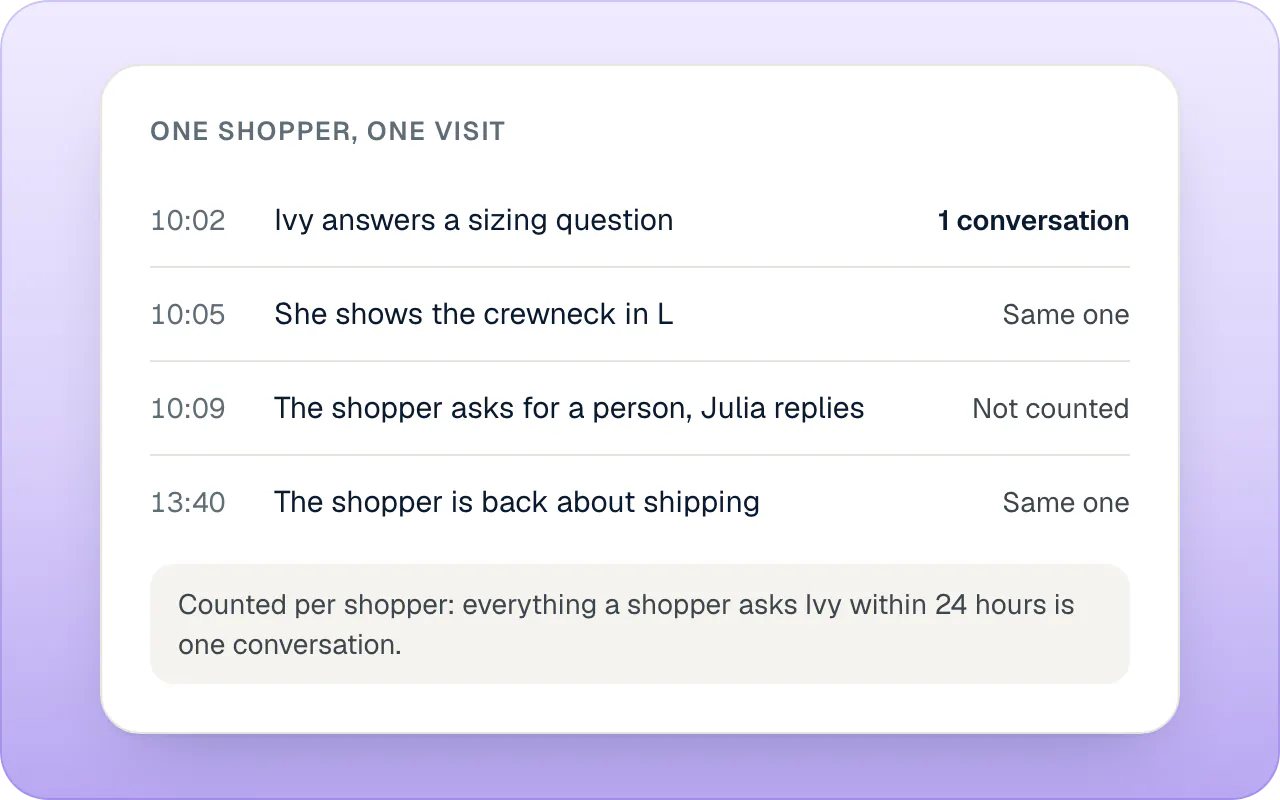
On Tidio, the same visit would be a Lyro conversation, and the moment Julia replies, a billable helpdesk conversation too. The rule in full, with a worked example, is in what counts as an Ivy conversation.
There's no automatic overage either. When the month's allowance runs low, you buy extra conversations ahead, any number from 10, at your plan's own rate, and they never expire: they carry over to next month, survive a plan change and are still there if you cancel and come back. If the allowance and the extras run out, Ivy finishes the conversations she's in and new ones go to your team, so the chat never goes dark and the bill never surprises you.

Selling in the chat
Ivy reads your catalog from Shopify (products, variants, prices, stock, options and collection names), along with your policies, published pages and shipping rates. When a shopper describes what they want, she recommends from that catalog and the chat shows a card per product: photo, price, a struck-through compare-at price when there is one, stock, an option picker and Add to cart. When the shopper is ready, she builds a real Shopify cart with a Checkout button. Ivy's product recommendations from your live catalog show the whole flow.
You decide which products she may suggest, and she never invents a product, a price or a discount code. Sales are counted by one stated rule: an order placed within 3 days of a conversation with Ivy counts as a sale from that conversation, and each order links back to the conversation that led to it, so you can check them one by one in sales from conversations.
Orders, handoff and your team
Order status needs no setup, and changes are cautious by default. Ivy prepares the refund, the cancellation or the new address with a reply already written; a teammate checks both and presses one button, such as Send and refund. When you're comfortable, you can let her act alone on one action at a time, with a cap per order; exchanges and partial cancellations always go to a person. Refunds and address changes within your limits covers what she can do and when.
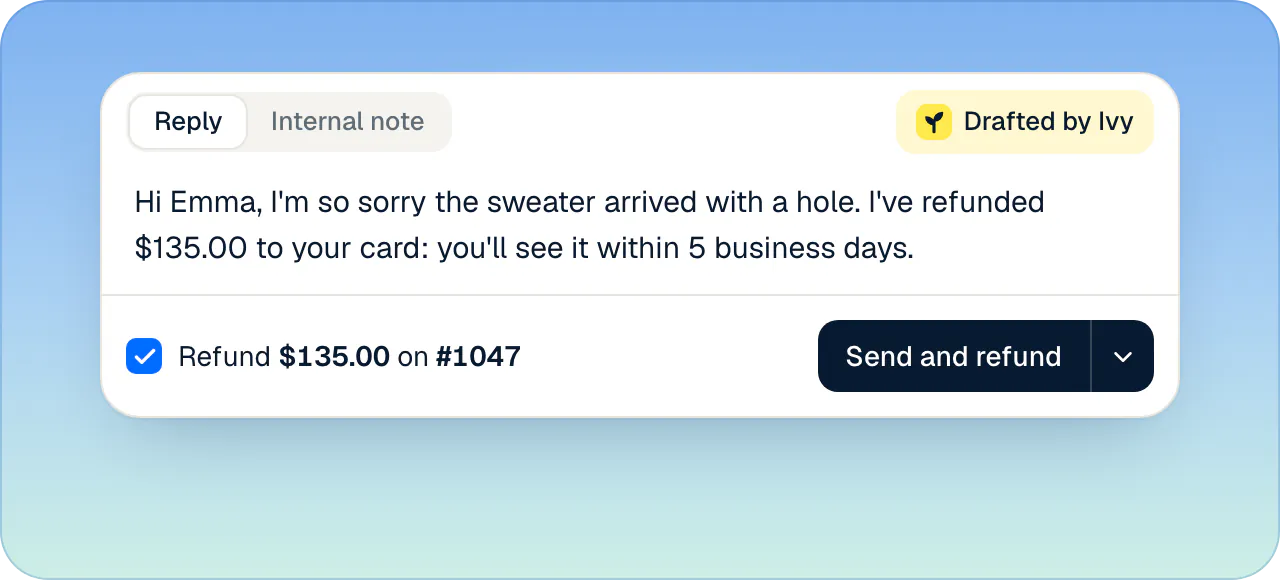
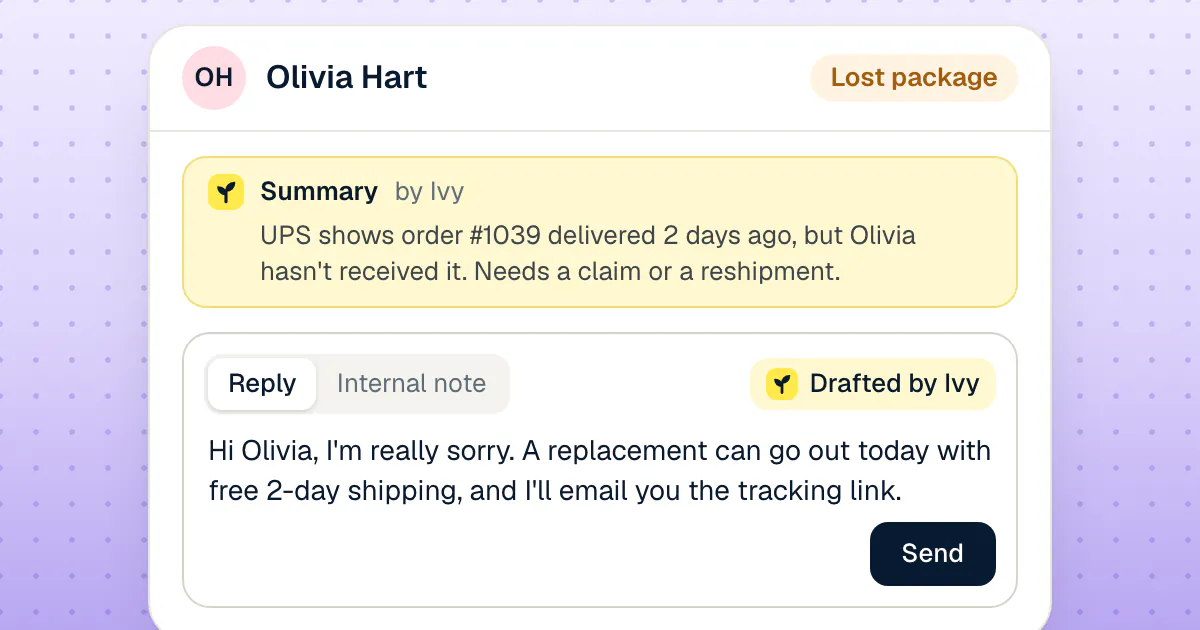
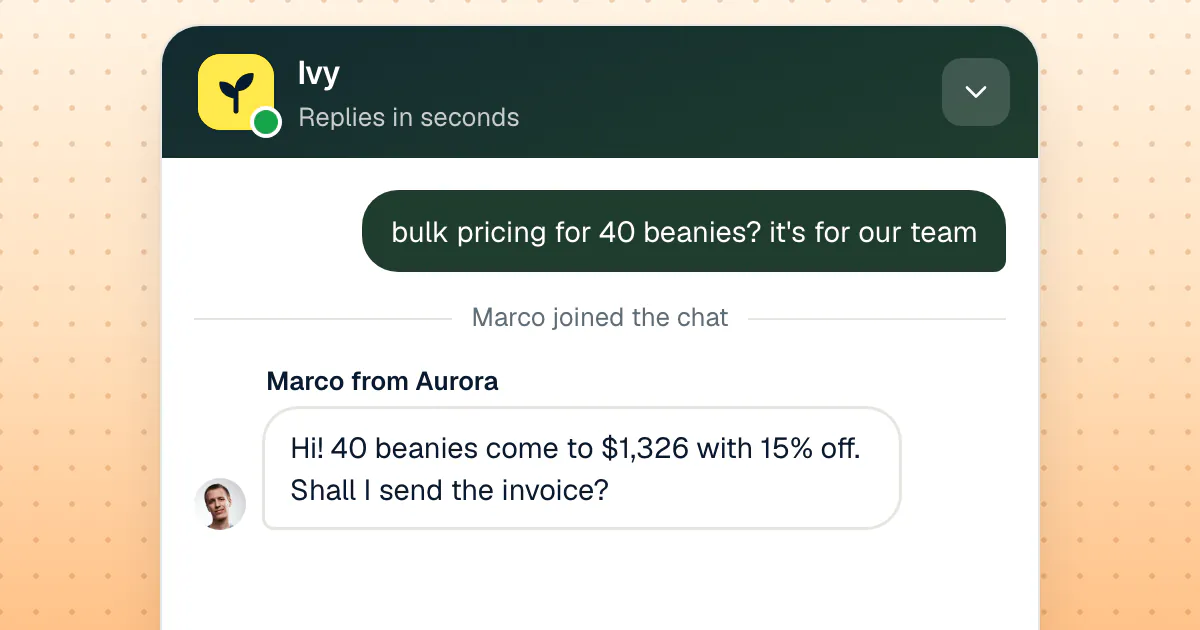
Handoff rules decide what reaches a person: a refund request above an amount you choose, a shopper who asks for a person or sounds upset, a wholesale order, or words you list yourself, such as "chargeback". Each handoff arrives in a shared inbox with Ivy's summary and a drafted reply. Business hours decide what Ivy does while you're away, a shopper who left gets your reply by email, and your team can answer from the iPhone app with a push when a shopper needs you, included in every plan and free on the App Store.
Strathly pricing
| Plan | Price a month | Ivy conversations a month | Extra conversation | Teammates |
|---|---|---|---|---|
| Starter | $39 | 100 | $0.39 | 2 |
| Growth | $79 | 300 | $0.26 | 5 |
| Scale | $199 | 1,000 | $0.20 | Unlimited |
Prices in US dollars, excluding VAT and sales tax. Your team's conversations are unlimited on every plan, every feature is on every plan (order actions, handoff rules, analytics, the iPhone app, hiding Strathly's branding). Everything is on Strathly's plans and prices, with a calculator for your volume.
Pros
- One unit, the Ivy conversation, with your team's conversations unlimited and no AI add-on on top of a helpdesk.
- Order status plus refunds, cancellations, address changes and replacements, with approval by default and Ivy's autonomy only where you switch it on.
- Product cards with options, Add to cart and a real Shopify cart; sales you can check order by order.
- Handoff rules, keyword rules, Ivy's summary and drafted reply, business hours and an iPhone app, all on every plan.
Cons
- There is no free plan. What you get instead is a 14-day free trial on Growth with every feature from day one, including order actions, analytics and the iPhone app, and your team's conversations unlimited, where free tiers elsewhere stop at answering questions.
2. Chatty: the cheapest paid start on Shopify
Chatty is a Shopify-only AI chatbot and live chat with a helpdesk inbox, sold as an AI sales agent. Like Strathly, it bills AI conversations and leaves human conversations unlimited, which makes it the closest match to what most Tidio users actually want. It has the largest review base among the AI-first chat apps on Shopify.
Runs on: Shopify only.
What it does for a store: AI answers and product recommendations from the Free plan, AI order tracking from Basic, and the full AI shopping assistant with a better AI model, proactive messages and abandoned-cart recovery from Pro. The inbox also covers WhatsApp, Messenger, Instagram and email.
Pricing (Chatty's pricing page, monthly billing, read October 17, 2026):
- Free: 50 AI conversations a month, AI trained on up to 200 products, 1 team member.
- Basic: $19.99 a month for 100 AI conversations, 500 products, 5 members.
- Pro: $68.99 for 500 AI conversations, 8,000 products, 10 members. Plus: $199 for 1,000 AI conversations, 20,000 products, unlimited members.
- $0.40 for each AI conversation beyond the plan, with a spending cap you can set in the app; a 7-day free trial.
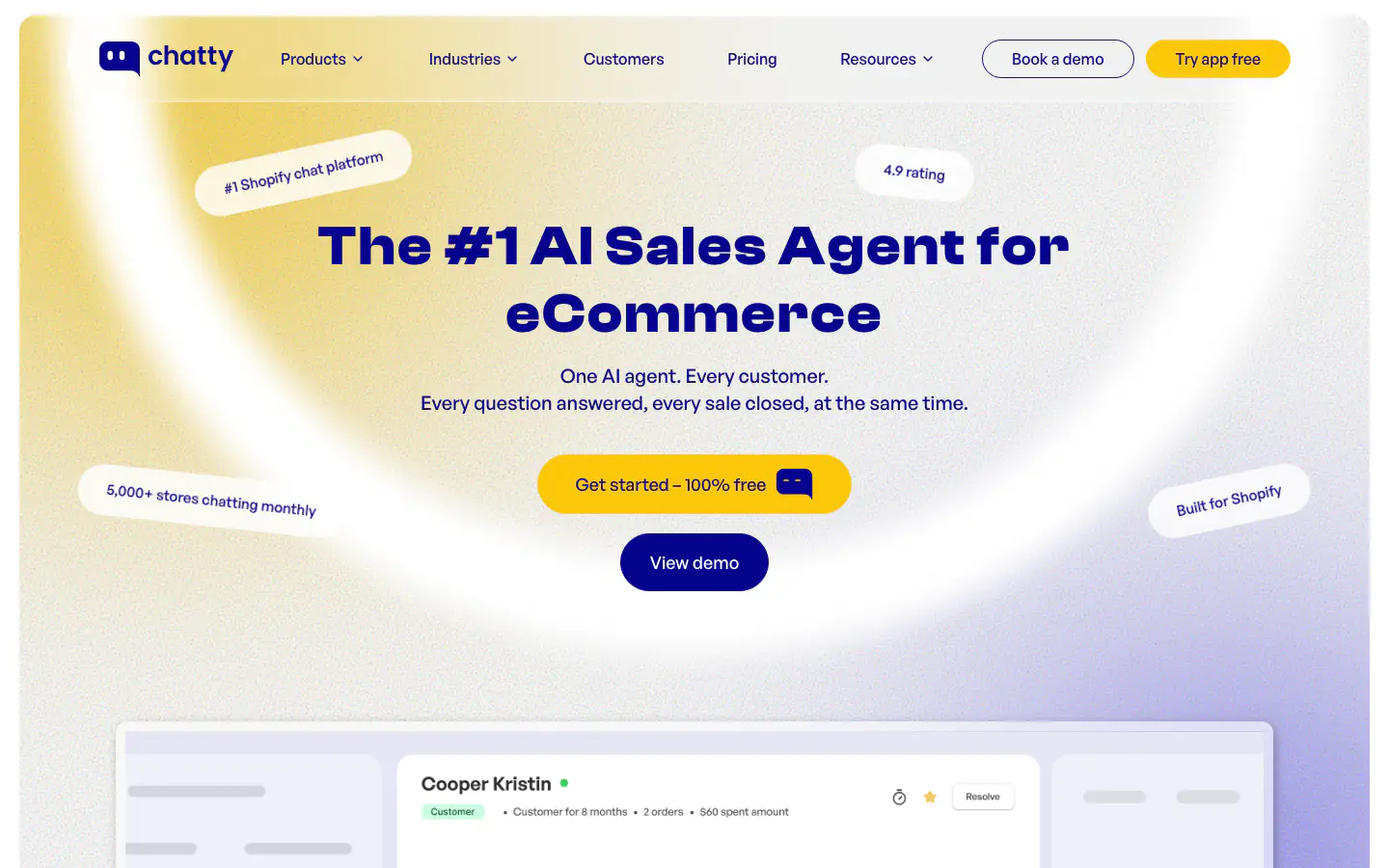
Pros: a free plan and a $19.99 entry; one AI meter with human conversations unlimited; 4.9 stars from 1,879 reviews on the Shopify App Store.
Cons: the shopping assistant and the better AI model start at $68.99, and every plan caps the products the AI is trained on and the team members. Its pricing page lists AI order tracking but no AI refunds, cancellations or address changes. Strathly costs more at the very bottom, and the gap buys order changes with approval, handoff rules with a drafted reply and the iPhone app on every plan, with no cap on the products Ivy knows.
3. Shopify Inbox: the free, first-party option
Shopify Inbox is Shopify's own free chat, and with its Inbox agent it now answers shoppers with AI. If your Tidio bill is the problem and your store gets a handful of chats a week, it's the obvious free alternative to try first.
Runs on: Shopify only.
What it does for a store: according to Shopify's Help Center page on the Inbox agent, the agent answers product questions, recommends products, adds them to the cart and looks up orders. The customer is prompted to sign in before it shares order information, it needs new customer accounts, and Inbox is available on the Basic, Grow, Advanced and Plus plans. Customers see a notice that the chat is powered by Shopify, which "can't be removed or customized". When your staff can't take a handoff, the agent shares your store's sender email address.
Pricing: free (Shopify App Store listing, read October 17, 2026).
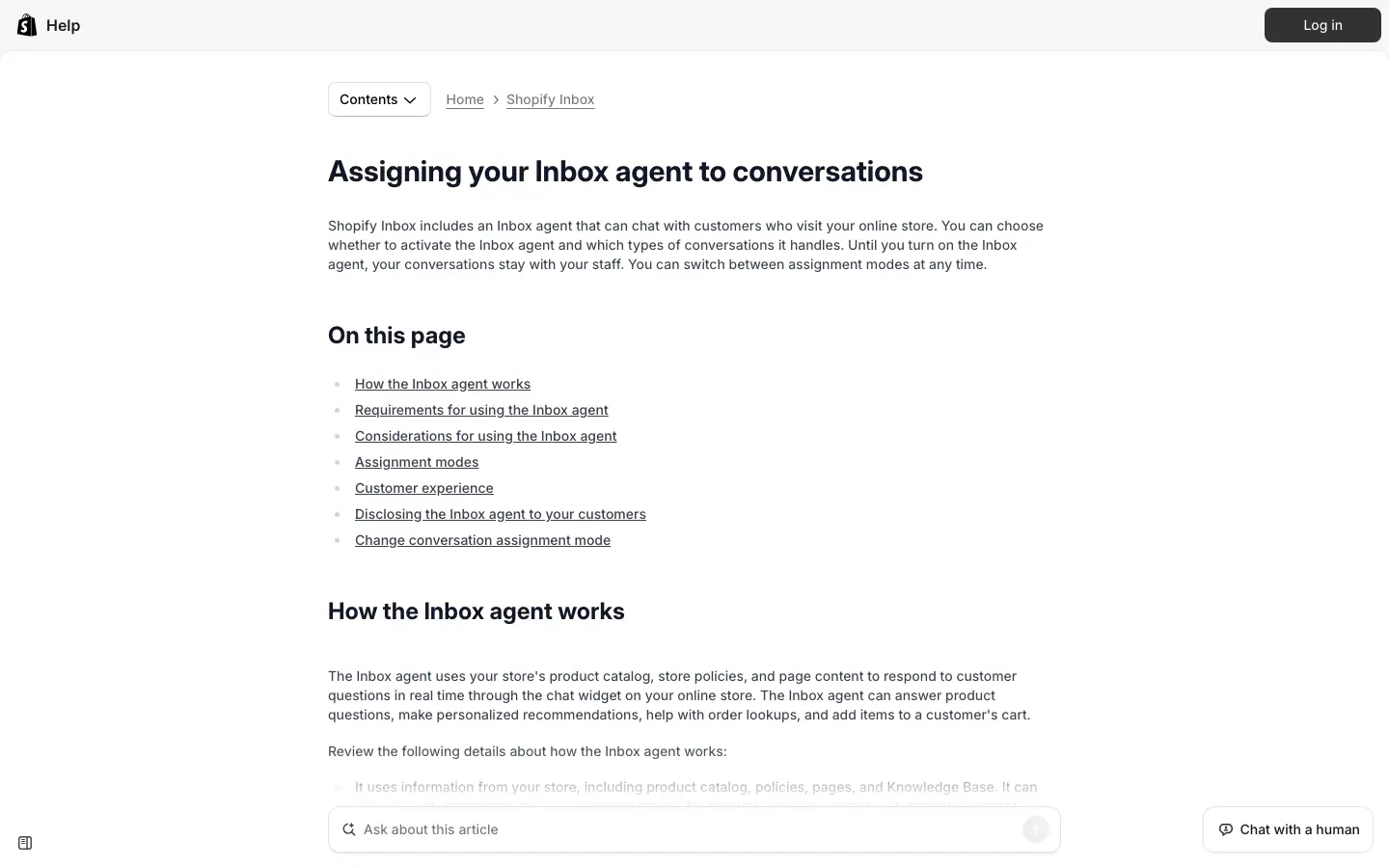
Pros: free and already part of Shopify; 4.6 stars from 5,815 reviews; staff apps for iOS and Android; the agent replies in the customer's language.
Cons: no refunds, cancellations or address changes among the agent's tasks, order lookups behind a sign-in, and a fixed "powered by Shopify" notice. Inbox is free, but it stops at answering: Strathly adds order changes with approval, handoff rules with a drafted reply, business hours that take the shopper's email, and sales you can check order by order.
4. Gorgias: the full ecommerce helpdesk
Gorgias is the best-known ecommerce helpdesk: one inbox for email, chat, social, SMS and voice, with an AI Agent that resolves support questions and works as a shopping assistant. If your team lives in tickets across many channels and Tidio's ten-seat ceiling is what you hit, Gorgias is built for that.
Runs on: Shopify, WooCommerce, BigCommerce, Magento and PrestaShop.
What it does for a store: the AI Agent answers, tracks orders and runs actions such as cancelling orders and updating addresses; agents see Shopify orders inside each ticket and can refund and edit them there.
Pricing (Gorgias's pricing page with the AI Agent included, read October 17, 2026):
- Starter: $40 a month for 50 tickets and 30 automated interactions (monthly billing only, 3 user seats).
- Basic: $90 a month ($77 billed annually) for 300 tickets and 30 automated interactions.
- Pro: $550 a month ($471 annually) for 2,000 tickets and 190 automated interactions. Advanced: $1,430 ($1,227 annually) for 5,000 and 530.
- The pricing FAQ says each AI Agent interaction "also counts as a helpdesk ticket and is billed accordingly"; automated interactions cost $0.90 to $1.00 each, depending on billing. A 7-day free trial.
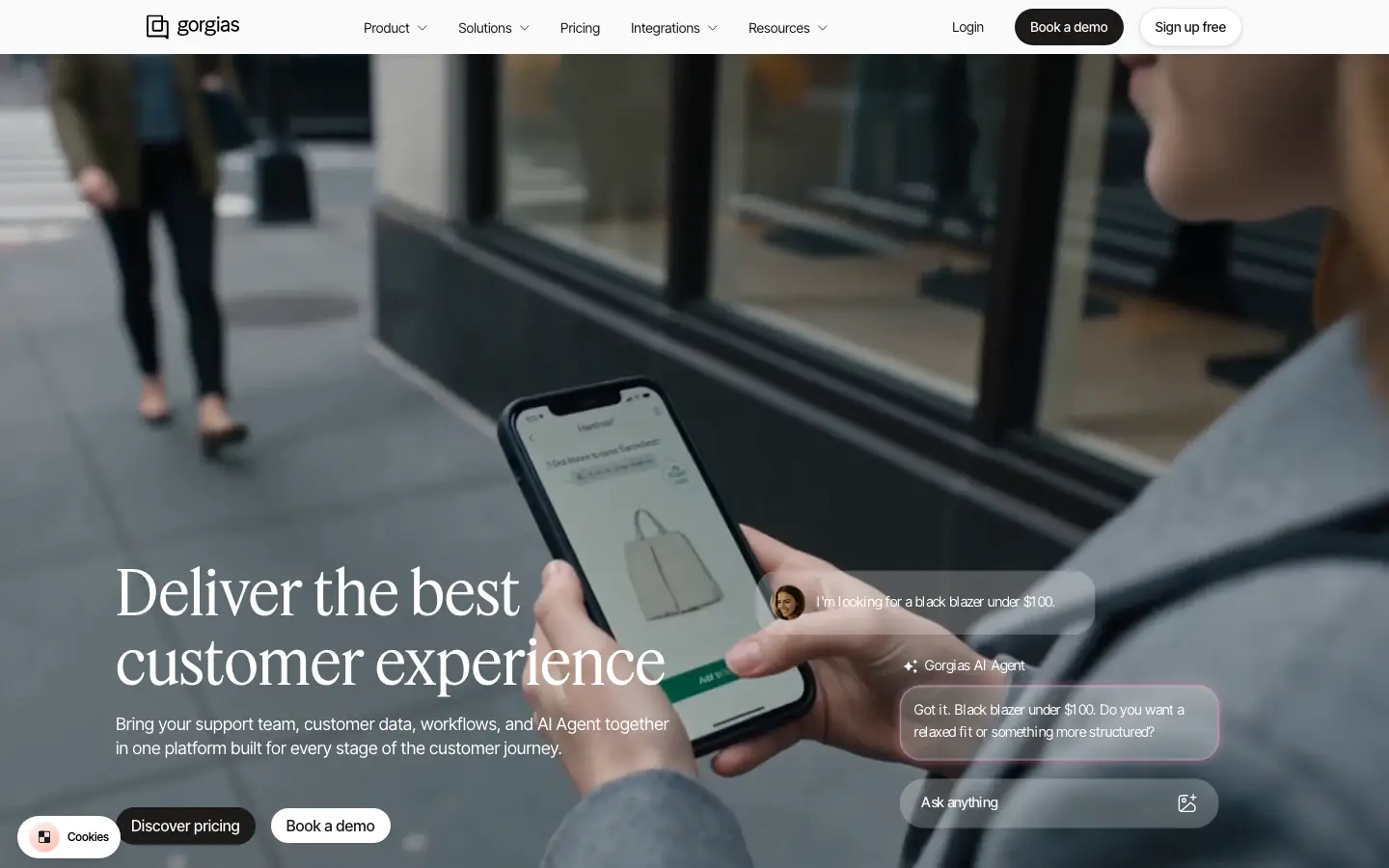
Pros: the deepest helpdesk in this list, every channel including voice, up to 500 user seats from Basic, mobile apps; 4.3 stars from 706 reviews on the Shopify App Store.
Cons: two meters for one conversation the AI resolves (an automated interaction and a ticket), and only 30 automated interactions on the two smaller plans. A store that mostly needs its storefront chat to sell and answer pays for a helpdesk it may not use: Strathly's Growth plan includes 300 Ivy conversations for $79, with no ticket meter. If Gorgias is what you're leaving rather than joining, see seven Gorgias alternatives for Shopify stores.
5. Zipchat: AI sales on the site, WhatsApp and Instagram
Zipchat is an AI sales and support agent for ecommerce that sells on several channels at once: the website chat, WhatsApp, Instagram, Messenger and email. Where Tidio started as a live chat and added AI, Zipchat is AI-first and sales-first.
Runs on: Shopify and Shopify Plus, WooCommerce, BigCommerce, Magento and Adobe Commerce, Salesforce Commerce Cloud and PrestaShop.
What it does for a store: product recommendations, add to cart, upsells and cart recovery; order status, with returns and refunds for your approval and address changes through integrations. It hands off to its own live chat or to your helpdesk.
Pricing (Zipchat's pricing page, read October 17, 2026):
- Starter: $80 a month billed monthly ($64 billed annually) for 750 AI replies, which Zipchat estimates at around 300 conversations.
- Pro: $300 for 3,000 replies (around 1,250 conversations); Scale: $600 for 6,000; Scale Plus: $1,200 for 14,000; Unlimited from $2,100.
- Extra replies: $49 per 250 (per 500 on Scale Plus). A 7-day trial and a 30-day money-back guarantee on the first payment.
- The Shopify App Store listing adds a free plan of 120 AI replies a month, "around 50 conversations".
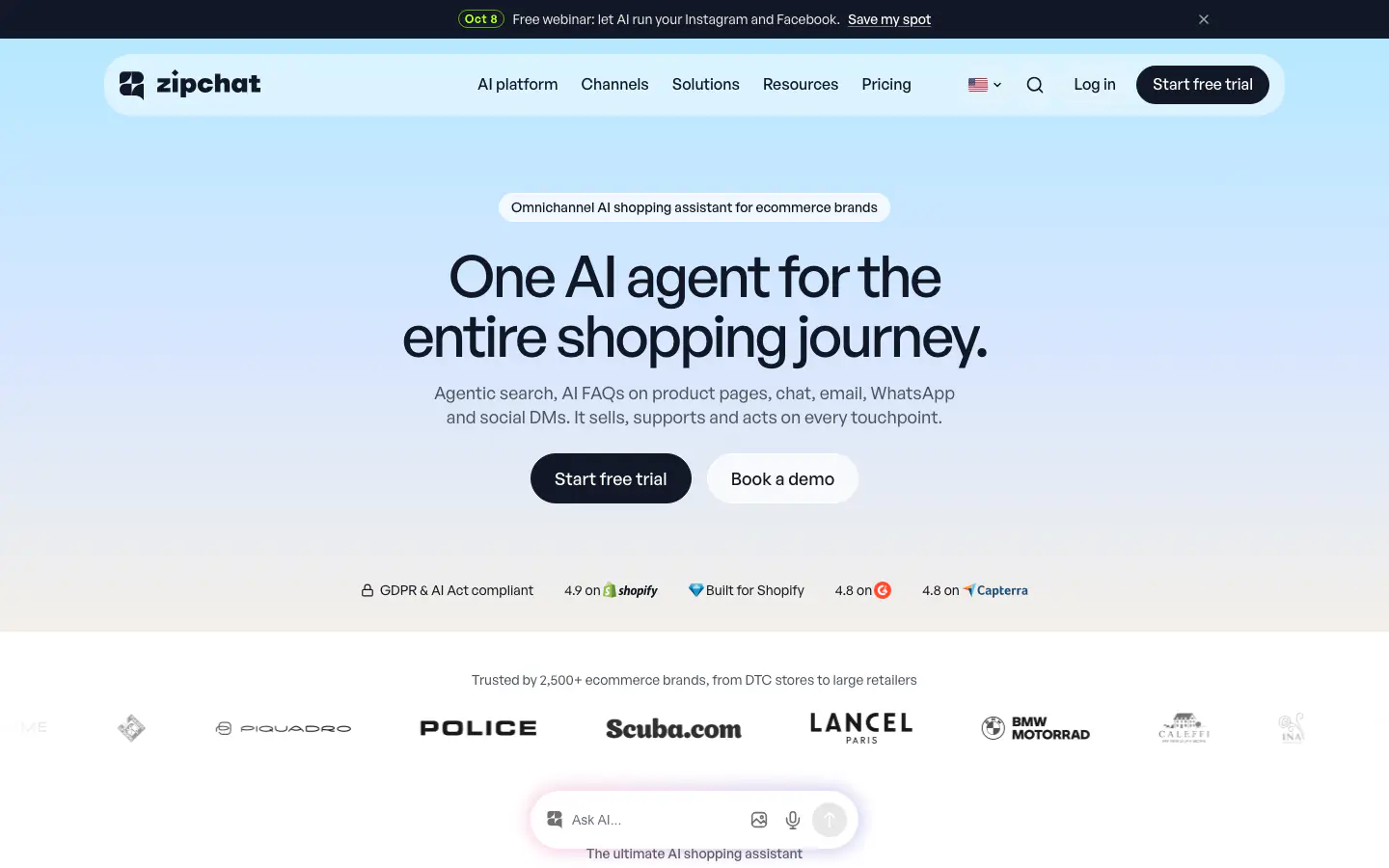
Pros: omnichannel AI on every plan, broad platform support, order actions, unlimited team members; 4.9 stars from 208 reviews on the Shopify App Store.
Cons: every AI reply is a unit, so a long sales chat uses several, and the conversation figures are the vendor's estimate. Strathly counts a whole visit as one conversation, up to 30 of Ivy's replies, so the number on the pricing page is the number you get.
6. Fin by Intercom: an AI agent for teams on a helpdesk
Fin is Intercom's AI agent, now owned by Salesforce (the acquisition completed on September 10, 2026). Fin for Ecommerce is its version for online stores: it recommends products, guides shoppers to checkout and handles tracking, returns and order changes. It's the most capable AI in this list for a team that already runs Intercom, Zendesk or Salesforce.
Runs on: any website through Intercom's Messenger, and on top of helpdesks such as Zendesk and Salesforce. Fin for Ecommerce is presented as "purpose-built for Shopify".
What it does for a store: pre-purchase questions, recommendations and add to cart, plus order status, returns, exchanges and order updates through Procedures you configure; voice, email, WhatsApp and SMS channels.
Pricing (Intercom's and Fin's pricing pages, read October 17, 2026):
- Intercom helpdesk with Fin: Essential $39 per seat a month billed monthly, Advanced $99, Expert $139, less on annual billing, plus $0.99 per Fin outcome.
- An outcome is counted when the customer confirms the issue is resolved, doesn't ask for more help after Fin responds, or when Fin completes a Procedure, "including handoffs"; it's charged once per conversation.
- Fin on another helpdesk: $0.99 per outcome with a minimum of 50 outcomes a month. A 14-day free trial without a card; one full seat minimum.
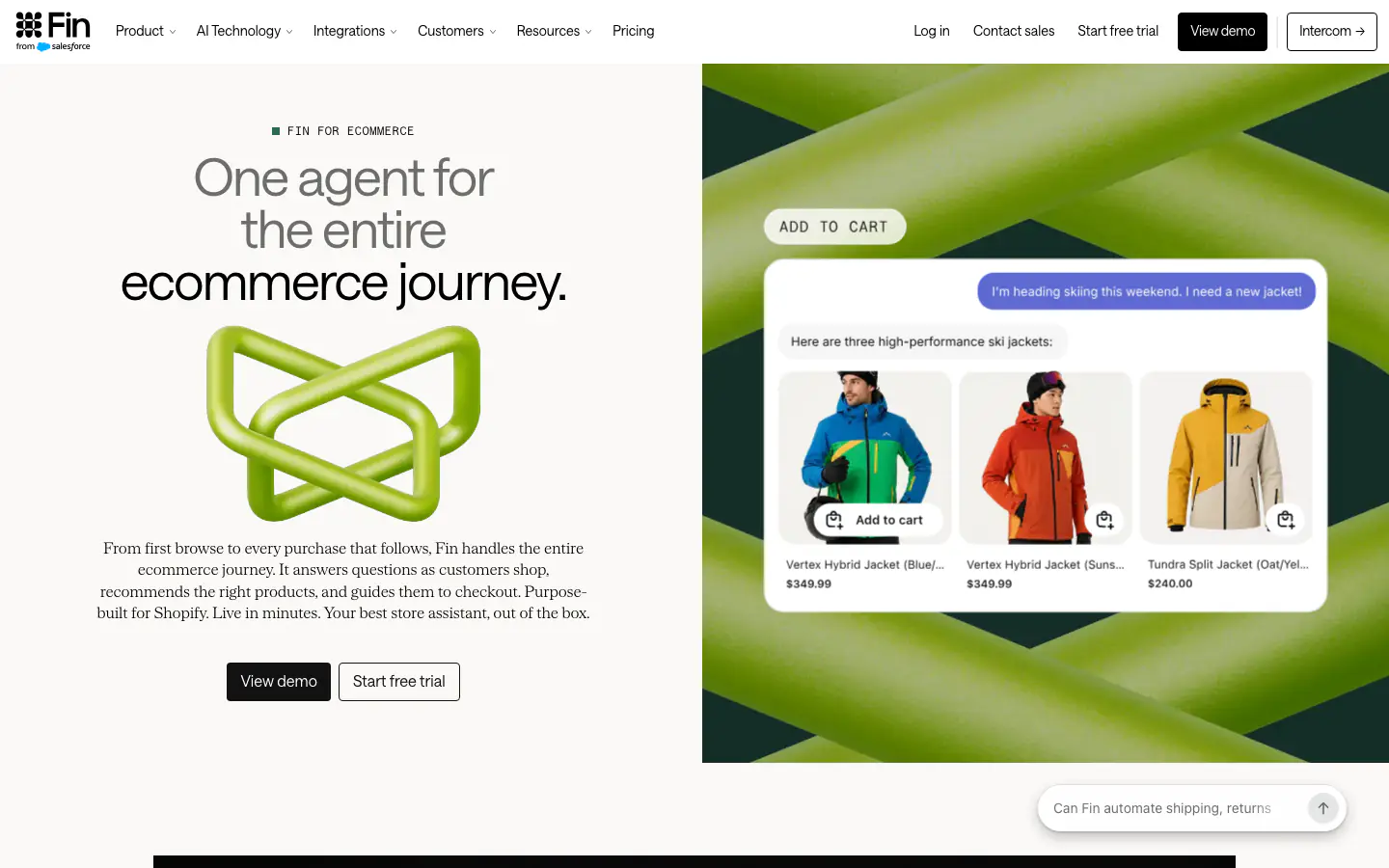
Pros: a strong agent for both sales and support, works on top of the big helpdesks, many channels, enterprise references.
Cons: two costs to forecast, seats and outcomes, and an outcome can include a handoff; 3.7 stars from 18 reviews on the Shopify App Store. For a Shopify store, Strathly's $39 covers 100 Ivy conversations and 2 teammates in one fixed price. Already on Intercom and looking around? Intercom (Fin) alternatives for ecommerce compares seven.
7. Crisp: a flat price per workspace
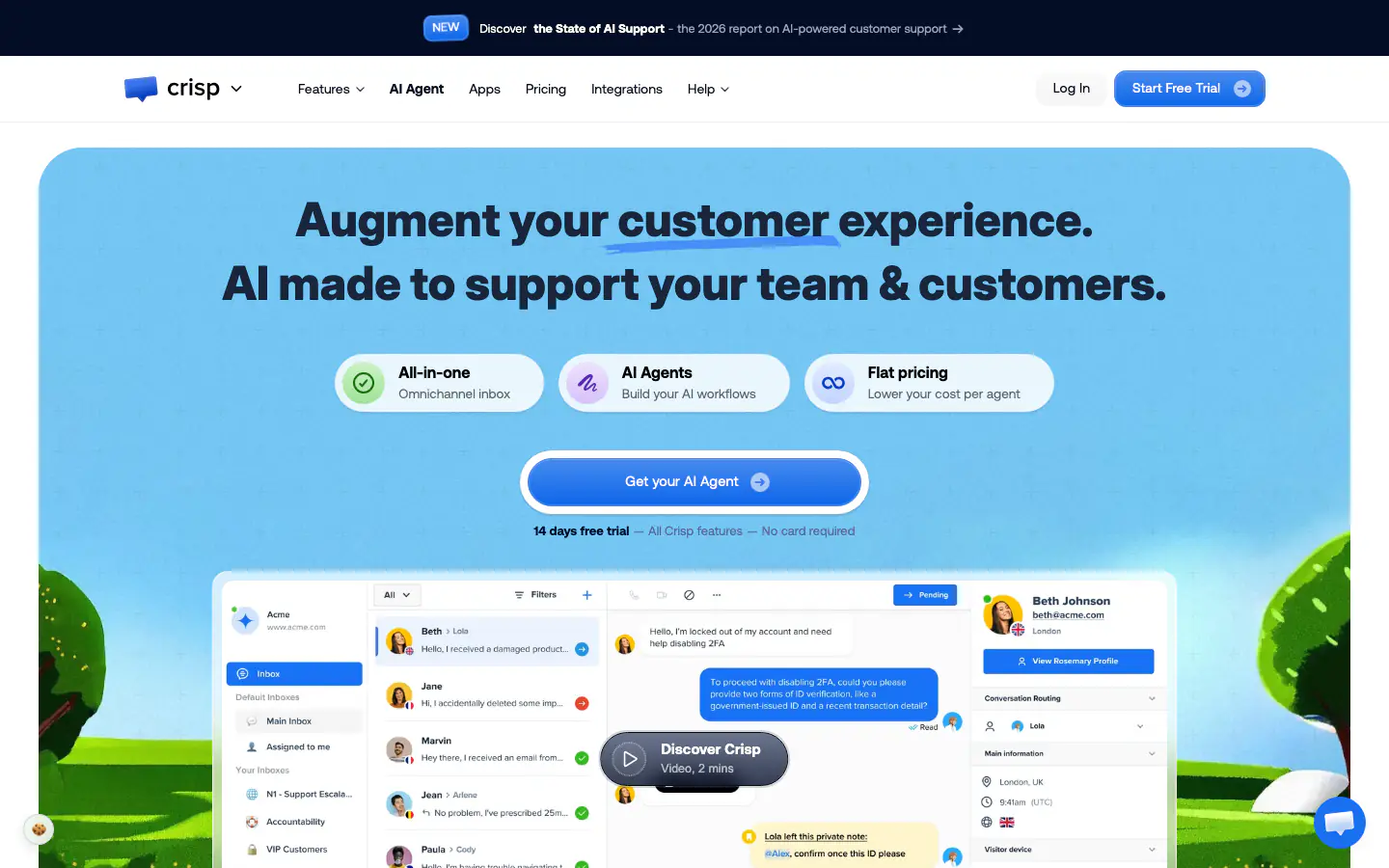
Crisp is a French multichannel inbox with a chat widget, a knowledge base and an AI agent called Hugo. It's the alternative for a store whose problem with Tidio is metering itself: Crisp charges a flat price per workspace with no limit on conversations, and puts the AI on credits included in each plan.
Runs on: any website, with a Shopify app ("Crisp, Helpdesk & AI Chatbot") and integrations for WooCommerce, Adobe Commerce and PrestaShop.
What it does for a store: chat, email, WhatsApp, Instagram, Messenger and SMS in one inbox; Shopify customer and order data next to the conversation. Crisp's help center lists two Shopify tools for Hugo: "Get user" (profile and order history) and "Get order" (status, items and delivery information). No refund, cancellation or address-change tool is listed for Shopify there.
Pricing (Crisp's pricing page and Shopify App Store listing, read October 17, 2026; the page showed euro amounts to our location, the dollar list prices are the same numbers):
- Free: 2 seats, the website chat, Shopify data sync and mobile apps; no AI credits.
- Mini: $45 a month per workspace, 4 seats, $5 of AI credits ("around 90 automated conversations").
- Essentials: $95, 10 seats, $25 of AI credits (around 450), the omnichannel inbox and AI chatbot builder. Plus: $295, 20 seats, $75 of AI credits (around 1,350), white labelling.
- $10 a month per extra seat; VAT not included; a 14-day free trial with no card.
Pros: a free plan, flat pricing with unlimited conversations, a wide set of channels, desktop and mobile apps.
Cons: the AI runs on credits, and the "automated conversations" figures are estimates; removing Crisp's branding needs the $295 Plus plan; the Shopify AI tools listed are order lookups, not order changes; 4.0 stars from 34 reviews on the Shopify App Store. Strathly hides its branding on every plan and lets Ivy prepare refunds and address changes for one-click approval.
Tidio vs Intercom and Tidio vs Gorgias, in short
Two comparisons come up again and again when a store outgrows Tidio. Here they are in one paragraph each, with the facts above.
Tidio vs Intercom. Tidio is the cheaper start: a free plan, $29 for the helpdesk, and Lyro bought by the conversation. Intercom is the bigger platform: seats from $39 a month on monthly billing, Fin billed per outcome, and more channels, integrations and reporting. Tidio suits a small team that wants a simple inbox; Intercom suits a support team with a helpdesk budget. For a Shopify store, both ask you to forecast two meters (Tidio's helpdesk and Lyro conversations, Intercom's seats and outcomes); Strathly asks you to forecast one.
Tidio vs Gorgias. Tidio is chat-first and cheaper at low volume; Gorgias is a ticket-based ecommerce helpdesk built for teams that answer email, social and voice together, and it's deeper in Shopify orders inside the ticket. Both bill the AI on top of the helpdesk: Tidio per Lyro conversation, Gorgias per automated interaction that also counts as a ticket. A store whose real work is the storefront chat pays for either helpdesk without needing it; Strathly bills only the conversations its AI takes.
How to choose a Tidio alternative
Choose a Tidio alternative by the unit you'll pay for, then by how far into orders the AI goes, then by where the handoff lands. If you're on Shopify, that order narrows the field in minutes.
Count your month in the new tool's unit
Take last month's numbers from Tidio: Lyro conversations, billable conversations, and how many Lyro conversations ended with a human reply. Then price the same month in each alternative's unit. A worked example for a store with about 300 AI conversations a month, from the prices above (monthly billing, read October 17, 2026):
- Tidio: $210 for 300 Lyro conversations, plus a Customer Service plan for your team's replies ($29 for 100 billable conversations).
- Strathly: $79 on Growth, which includes 300 Ivy conversations and 5 teammates; your team's own conversations are unlimited.
- Chatty: $68.99 on Pro for 500 AI conversations, with up to 10 members and 8,000 products.
- Zipchat: $80 for 750 AI replies, which Zipchat estimates at around 300 conversations.
- Fin: up to 300 outcomes at $0.99, about $297, plus at least one helpdesk seat.
At about 1,000 AI conversations a month the gap widens: Lyro alone costs $700 a month at that tier, before the helpdesk plan, while Strathly's Scale plan includes 1,000 Ivy conversations for $199 with unlimited teammates. Chatty is the cheapest line at 300, and it's a fair choice for a store that only needs answers and recommendations; the difference with Strathly is order changes with approval, handoff rules with a drafted reply and the iPhone app, on every plan. What counts as a conversation on Strathly is one visit, one conversation: check the equivalent rule before you trust any vendor's estimate.
Decide how far into orders the AI should go
Order status is table stakes in 2026. The difference is what happens next: does the AI only tell the shopper to email you, or can it prepare the refund, the cancellation or the address change for your approval and, if you choose, do it alone within a cap? Ask every vendor what it does by default, how the shopper is verified, and whether a mistake can be undone. In Strathly, order actions wait for approval until you let Ivy act herself, only for a shopper who proved the order is theirs.
Check what the AI does when it doesn't know
Every AI chat gets questions your store's content doesn't answer. The good ones say so, hand off, and tell you what was missing; the bad ones guess. Ask to see where unanswered questions go in each tool.
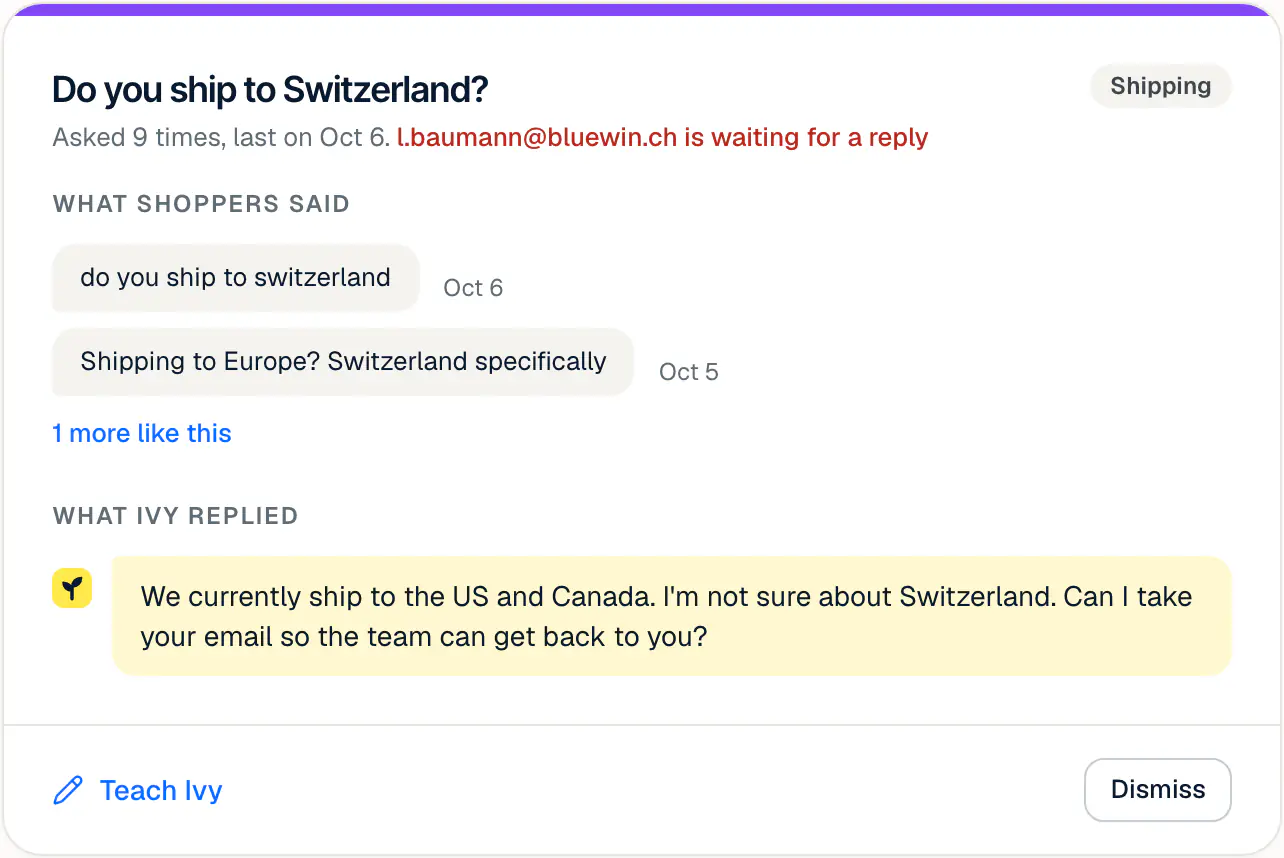
In Strathly, Ivy answers only from your store; when she can't, she says so, offers to take the shopper's email, and the question joins your Unanswered list with every similar wording grouped. You answer it once and she uses it from then on; the docs show how to fill the gaps Ivy found. It's the part of how Ivy learns your store that saves the most time in the first weeks.
Look at where the handoff lands
A handoff is only as good as the inbox it lands in. If you already run a helpdesk your team likes, an AI that hands off into it (Fin, Zipchat) keeps one queue. If you don't, you want a shared inbox with the AI's context in the box: the summary, the order and a drafted reply. Small teams should also check for a phone app with push, because the person on call is rarely at a desk. Still deciding how much the AI should answer at all? Chatbot vs live chat for Shopify stores splits the questions, and what live chat does for a store's sales sums up the research.
Test languages with a real question
If you sell abroad, ask each tool's preview a question in the language of your second market, in the words a shopper would use. The answer should come back in that language and from your own policy, not from general knowledge.
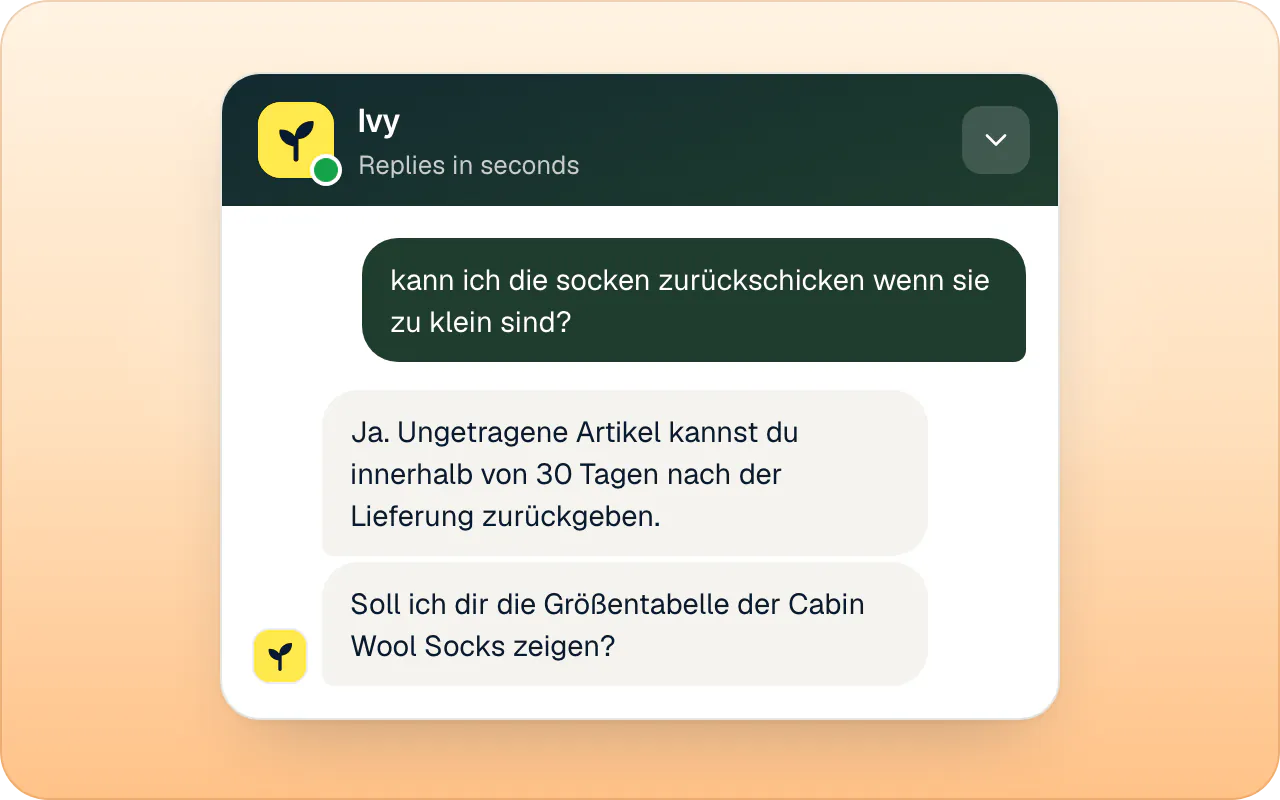
Ivy replies in the language the shopper writes in by default, and you can limit her to the languages you choose; the docs explain how Ivy chooses the shopper's language. Before a busy season, run the same test with your handoff rules too: the Black Friday customer service checklist puts it weeks ahead of the peak for a reason.
Switching from Tidio to Strathly
Switching from Tidio to Strathly takes one visit to your theme editor, and your store is never without a chat in between. There's nothing to export: Ivy reads your products, policies, pages and shipping rates from Shopify.
- Set Ivy up while Tidio keeps running. Connect Shopify, let Ivy read the store, choose her name and look, and test her in the Playground on your real catalog and orders. Nothing shows on your store until you press Go live. How Strathly goes from install to first answer walks through the steps.
- Bring what only Tidio knew. Your Lyro knowledge and saved replies don't need to be rebuilt from scratch: export what you wrote and add it with Teach Ivy, or upload it as a file in Knowledge. Past conversations stay in Tidio.
- Swap the chats in one save. In the theme editor's App embeds, switch Strathly's chat on and Tidio's off, then press Save once, so shoppers never see two buttons.
- Update your chat links and cancel Tidio. Replace "chat with us" links with your Strathly chat link, then cancel Tidio with Tidio. Its billing is separate from Strathly's.
Each step is in the docs: move from another chat app, including what to do if your old chat was added with code rather than an app embed.
How Strathly helps
If you're leaving Tidio because the bill grows faster than the store, Strathly fixes the cause rather than the symptom: it has one meter, and it's the one that measures the work the AI does for you. Here is what you get, on every plan.
One price you can plan. Only Ivy's conversations count, your team's are unlimited, every feature is on every plan, extra conversations never expire and there is no automatic overage. The pricing calculator shows your month at your volume.
Answers from your store, and only your store. Ivy reads your catalog, policies, pages and shipping rates when you connect Shopify, and keeps them in sync. She doesn't invent products, prices or discount codes; when nothing in your store answers a question, she says so and the question goes on your Unanswered list.
Sales in the chat. Product cards with options and Add to cart, a real Shopify cart with checkout, and every sale from a conversation listed with the conversation that led to it, so you can check what the chat brings in.
Orders handled, within your limits. Order status from the order number and the checkout email; refunds, cancellations, address changes and replacements prepared for one-click approval, or done by Ivy within your cap when you switch them on. Order status answered in the chat shows the flow end to end.
A chat that looks like your store. Your colors, your launcher, your greeting and suggested questions, light or dark, and Strathly's branding hidden if you want, on every plan. It goes in as a Shopify theme app embed: a chat widget in your brand's colors shows the options.
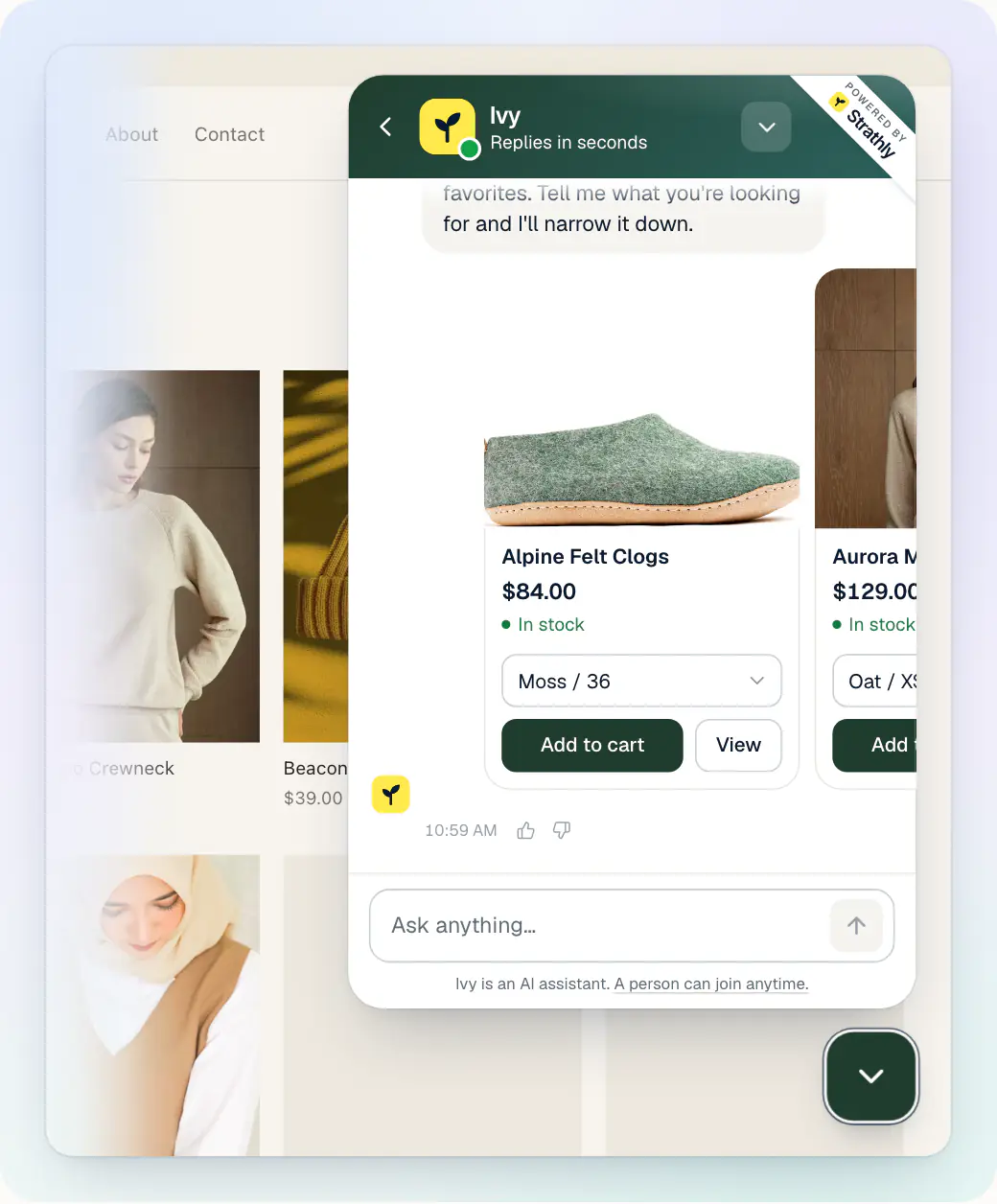
Your team, without seat math. Handoff rules and keyword rules, Ivy's summary and drafted reply, a shared inbox with Needs you, business hours and a reply target, and the iPhone app with push. The handoff to your team with a drafted reply works the same on Starter and on Scale, and every feature, on every plan lists the rest.
Frequently asked questions
What is the best Tidio alternative for Shopify?
Strathly, for a Shopify store that wants its chat to sell and handle orders: it bills only the conversations Ivy takes, leaves your team's conversations unlimited, and puts order actions, handoff rules and the iPhone app on every plan. Chatty is the cheapest paid start, Shopify Inbox the free one, and Gorgias the pick for a large multichannel helpdesk.
Is Tidio better than Strathly?
No: for a Shopify store that wants its chat to sell and work on orders, Strathly does more for less as volume grows, because 1,000 Lyro conversations cost $700 a month on top of Tidio's helpdesk plan, while Strathly's Scale plan includes 1,000 Ivy conversations for $199. The honest exception: if you sell on several platforms or need email and social in one inbox, Tidio covers that and Strathly doesn't.
Is there a free alternative to Tidio?
Yes: Shopify Inbox is free, and Chatty, Crisp and Zipchat's Shopify listing have free plans. Free tiers answer questions; they stop short of order changes and keep their AI allowance small (50 AI conversations on Chatty's Free plan, no AI credits on Crisp's). Strathly has no free plan, but a 14-day free trial with every feature.
Why is Tidio expensive for growing stores?
Because the AI is a separate meter on top of the helpdesk. Lyro costs $39 for 50 conversations and $700 for 1,000 a month (Tidio's pricing page, October 17, 2026), and a Lyro conversation your team then answers can also count as a billable helpdesk conversation. Strathly's unit is one Ivy conversation per shopper visit, with team replies never counted; see extra conversations that never expire.
Can I move my Tidio setup to Strathly?
Your catalog, policies and pages don't need moving: Ivy reads them from Shopify. Saved replies and FAQ answers come along through Teach Ivy or a file upload, and the switch itself is one save in your theme's App embeds. Past Tidio conversations stay in Tidio.
Does Strathly work outside Shopify, like Tidio?
No, Strathly runs on Shopify only today. If your store is on WooCommerce, BigCommerce or another platform, Gorgias, Zipchat, Fin and Crisp in this list support other platforms; each entry says which.
Conclusion
Tidio is a good chat with an expensive habit: it bills the helpdesk, the chatbots and the AI separately, and the AI meter is the one that grows. Helpdesks such as Gorgias and Fin earn their cost when your team works every channel; Chatty and Shopify Inbox win on the entry price and stop at answering; Crisp flattens the price and keeps the AI on credits. For a Shopify store, Strathly is the Tidio alternative that sells, works on orders and bills one thing: the conversations Ivy takes, with your team's unlimited and every feature on every plan.